
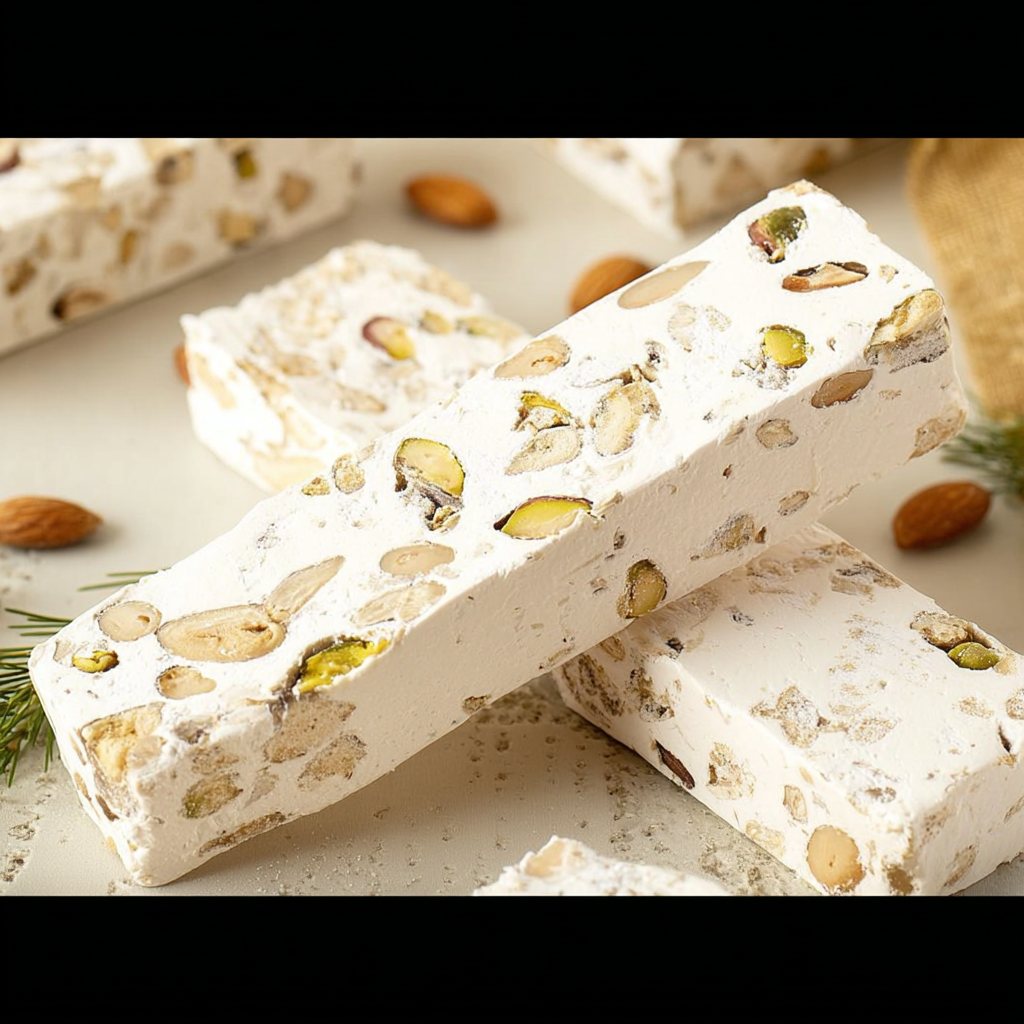
Why You’ll Love This Homemade Italian Nut Nougat (Torrone) Recipe
- Authentic Italian Bliss: This recipe delivers that irresistible chewy, nutty, and sweet perfection reminiscent of traditional Italian holiday markets. Forget store-bought; nothing beats the fresh, vibrant taste and texture of truly Homemade Italian Nut Nougat (Torrone) crafted with love in your own kitchen. It’s a culinary journey to Italy in every bite!
- Impressive Yet Achievable: While making nougat might sound daunting, our detailed steps make creating this gourmet confection surprisingly accessible. Imagine the gasps of delight when you present this stunning dessert. You’ll feel like a professional patissier, and your guests will be begging for the recipe!
- The Ultimate Gifting Treat: Looking for a unique, heartfelt gift? Individual pieces or a beautifully wrapped slab of Homemade Italian Nut Nougat (Torrone) make for an extraordinary present during holidays, birthdays, or just because. It’s a gift that truly shows you care, far more personal than any generic store-bought item.
- Customizable Nutty Nirvana: This recipe is a canvas for your nutty imagination! Whether you prefer the classic combination of almonds and pistachios or want to experiment with hazelnuts, pecans, or even macadamias, the choice is yours. Roast them to perfection, and let your personal touch shine through in every delicious batch of your Homemade Italian Nut Nougat (Torrone).
Ever dreamt of creating that magically chewy, wonderfully nutty, and perfectly sweet confection that transports you straight to a bustling Italian piazza? Well, get ready, because your culinary adventure begins now! We’re diving headfirst into the delightful world of Homemade Italian Nut Nougat (Torrone). This isn’t just a recipe; it’s an experience, a joyous dance of honey, sugar, and toasted nuts that results in a truly spectacular treat. Forget those mass-produced bars; nothing compares to the rich aroma and satisfying chew of torrone made right in your own kitchen. It’s a labor of love, yes, but one that rewards you with an irresistible confection that’s perfect for sharing, gifting, or simply savoring with a cup of espresso. So, roll up your sleeves, unleash your inner Italian chef, and prepare to be utterly charmed by this timeless dessert!
Ingredients for Your Homemade Italian Nut Nougat (Torrone)
Gather your magic ingredients, and let’s get ready to create some deliciousness! Precision is key for this delightful Homemade Italian Nut Nougat (Torrone).
- 2 sheets wafer paper, cut to fit a 9-inch square baking dish
- 1 cup (12 ounces) honey
- 1 and 2/3 cups granulated sugar
- 3 large egg whites, at room temperature
- 1 pinch salt
- 1 tablespoon vanilla extract (clear vanilla for a lighter color, if preferred)
- 1 tablespoon lemon zest
- 3 cups mixed roasted nuts (such as almonds, pistachios, hazelnuts, or pecans)
Detailed Steps to Craft Your Homemade Italian Nut Nougat (Torrone)
Follow these instructions closely, and you’ll be enjoying exquisite Homemade Italian Nut Nougat (Torrone) in no time!
- Prepare Your Dish: Start by lining a 9-inch square baking dish completely with plastic wrap. Carefully place one sheet of wafer paper on the bottom, smoothing it out. Set the other wafer sheet aside for later. This creates a non-stick base for your delicious creation.
- Whip the Egg Whites: In a stand mixer, beat the room-temperature egg whites with a pinch of salt until they form soft, fluffy peaks. Don’t overmix, as you want them just right for incorporating the hot syrup. Keep these whipped whites in the mixer bowl for the next step.
- Cook the Syrup: In a large, heavy-bottomed pot, combine the honey and granulated sugar. Heat this mixture over medium heat, stirring occasionally, until it reaches a precise temperature of 300°F. A candy thermometer is essential here for accuracy! This temperature is critical for the nougat’s texture.
- Combine Carefully: Immediately remove the hot sugar mixture from the stove and pour it into your stand mixer with the whipped egg whites. With the mixer running on medium-high speed, slowly drizzle in about 3 tablespoons of the hot syrup first, letting it blend. Then, gradually stream in the remaining syrup, beating continuously. This slow addition helps temper the egg whites without scrambling them.
- Flavor and Cool: Stir in the vanilla extract and fresh lemon zest. Continue whipping the mixture until the sides of the bowl have cooled down enough that you can comfortably keep your hand on them for about 10 seconds. This step is crucial for the nougat to thicken and set correctly! It can take a good while, so be patient.
- Add the Nuts: As soon as the mixture has cooled sufficiently, quickly fold in your roasted nuts until they are evenly distributed. Remember to work swiftly, as the nougat will start to thicken rapidly. The quicker you incorporate them, the better they’ll be dispersed throughout your Homemade Italian Nut Nougat (Torrone).
- Fill and Press: Pour the nougat mixture into your prepared baking dish, spreading it as evenly as possible over the bottom wafer paper. Place the second wafer paper sheet on top and gently press down firmly and smoothly. You can use the bottom of a cup or ramekin to help flatten it for a level top.
- Set and Slice: Allow the nougat to cool completely at room temperature until it is firm. Once set, carefully turn it out onto a cutting board, remove the plastic wrap, and use a long serrated knife to slice it into your desired pieces. For cleaner cuts, you can lightly oil your knife blade between slices.
Presenting and Serving Your Homemade Italian Nut Nougat (Torrone)
Your Homemade Italian Nut Nougat (Torrone) is a work of art, and it deserves to be showcased beautifully! Here are some ideas for presentation and serving:
- Classic Squares or Rectangles: The most traditional way to serve torrone is by slicing it into elegant squares or slender rectangles. Arrange them neatly on a decorative platter for a sophisticated dessert offering.
- Mini Bites for Parties: For a party-friendly option, slice the torrone into small, bite-sized cubes. These are perfect for guests to nibble on alongside other festive treats. They also make an excellent addition to a dessert charcuterie board.
- Gorgeous Gift Packaging: Wrap individual pieces or small blocks in clear cellophane bags tied with a pretty ribbon. For a more substantial gift, place a larger slab in a decorative box lined with tissue paper. It’s an incredibly thoughtful and impressive homemade present.
- Pair with Beverages: Torrone pairs wonderfully with a strong espresso, a rich cup of coffee, or a sweet dessert wine like Vin Santo. The bitterness of coffee or the complexity of wine beautifully balances the nougat’s sweetness.
- Accent with Fresh Fruit: For a lighter touch, serve your torrone alongside a platter of fresh seasonal fruits such as grapes, figs, or berries. The freshness of the fruit provides a lovely contrast to the rich nougat.
- Cutting Tips: To achieve clean cuts, ensure your torrone is completely firm. Use a long, sharp serrated knife, and if it starts to stick, lightly spray the blade with non-stick cooking spray or wipe it with a touch of neutral oil between cuts. Work with a confident, sawing motion.
Storing Your Homemade Italian Nut Nougat (Torrone)
Proper storage ensures your delightful Homemade Italian Nut Nougat (Torrone) stays fresh and delicious for as long as possible. Fortunately, torrone is quite shelf-stable!
- Airtight Container is Key: Once cooled and sliced, store your torrone in an airtight container at room temperature. Exposure to air can make it harder or sticky over time. A cookie tin or a good quality plastic container works perfectly.
- Keep it Cool and Dry: Avoid storing torrone in humid environments or direct sunlight. A cool, dry pantry is the ideal spot.
- Avoid Refrigeration: While it might seem counterintuitive, refrigerating torrone can actually make it excessively hard and diminish its classic chewy texture. The cold temperature can also cause condensation, leading to stickiness.
- Shelf Life: When stored correctly in an airtight container at room temperature, your Homemade Italian Nut Nougat (Torrone) will typically last for up to 2-3 weeks, or even longer in some cases. The high sugar content acts as a natural preservative.
- Freezing for Longer Storage: If you want to keep your torrone for an extended period, it can be frozen. Wrap individual pieces or small blocks tightly in plastic wrap, then place them in an airtight freezer-safe bag or container. It can last for up to 3 months in the freezer. Thaw at room temperature before serving.
FAQs About Homemade Italian Nut Nougat (Torrone)
1. What exactly is Torrone?
Torrone is a traditional Italian confection, a type of nougat, typically made with honey, sugar, egg whites, and roasted nuts, often sandwiched between two sheets of wafer paper. It comes in various textures, from soft and chewy (torrone morbido) to hard and brittle (torrone duro).
2. Is making Homemade Italian Nut Nougat (Torrone) difficult?
While it requires patience and precision, especially with temperature, it’s not inherently difficult. Following the steps carefully, especially using a reliable candy thermometer, makes it very achievable for home cooks. The results are incredibly rewarding!
3. What kind of nuts can I use for this recipe?
This recipe uses a mix of roasted nuts. Classic choices include almonds, pistachios, and hazelnuts. Pecans are also a delicious addition. Ensure your nuts are roasted for the best flavor and crunch.
4. Can I make Torrone without wafer paper?
The wafer paper is traditional and helps prevent sticking while making the torrone easier to handle and eat. While theoretically possible to omit, you’d need to grease and flour your dish meticulously, and the texture might be stickier to touch.
5. Why is a candy thermometer essential for this recipe?
A candy thermometer is absolutely crucial because the sugar syrup needs to reach a precise temperature (300°F) for the nougat to set correctly and achieve the desired texture. Eyeballing the temperature will likely result in a failed batch.
6. My nougat didn’t set, what went wrong?
The most common reasons for unset nougat are not cooking the sugar syrup to the correct temperature (300°F) or not whipping the mixture long enough after adding the syrup. The cooling step, where the bowl’s sides are comfortable to touch, is key for thickening.
7. Can I reduce the sugar in this Torrone recipe?
It’s not recommended to significantly reduce the sugar. Sugar, along with honey, plays a vital role in the structure and setting of the nougat. Altering the ratios too much can prevent it from setting properly or drastically change its texture.
8. How do I cut the Torrone without it sticking to my knife?
Ensure the torrone is completely cooled and firm. Use a long, sharp serrated knife. For extra clean cuts, lightly spray the knife blade with non-stick cooking spray or wipe it with a neutral oil (like vegetable oil) between each slice.
9. Is Homemade Italian Nut Nougat (Torrone) gluten-free?
Yes, traditionally made torrone using honey, sugar, egg whites, and nuts is naturally gluten-free. Wafer paper is typically made from potato starch, water, and oil, making it gluten-free as well. Always check ingredient labels to be certain.
10. Can I add other flavors to my Torrone?
Absolutely! Besides vanilla and lemon zest, you can experiment with orange zest, a dash of almond extract, a pinch of cinnamon, or even a tablespoon of instant espresso powder for a coffee-flavored nougat. Just be mindful not to add too much liquid that could affect the set.
Homemade Italian Nut Nougat (Torrone)
Equipment
- 9-inch square baking dish
- Stand Mixer
- heavy-bottomed pot
- candy thermometer
- Long serrated knife
Ingredients
- 2 sheets wafer paper cut to fit a 9-inch square baking dish
- 1 cup honey (12 ounces)
- 1 2/3 cups granulated sugar
- 3 large egg whites at room temperature
- 1 pinch salt
- 1 tbsp vanilla extract clear vanilla for a lighter color, if preferred
- 1 tbsp lemon zest
- 3 cups mixed roasted nuts such as almonds, pistachios, hazelnuts, or pecans
Instructions
- 1. Prepare Your Dish: Start by lining a 9-inch square baking dish completely with plastic wrap. Carefully place one sheet of wafer paper on the bottom, smoothing it out. Set the other wafer sheet aside for later.
- 2. Whip the Egg Whites: In a stand mixer, beat the room-temperature egg whites with a pinch of salt until they form soft, fluffy peaks. Keep these whipped whites in the mixer bowl for the next step.
- 3. Cook the Syrup: In a large, heavy-bottomed pot, combine the honey and granulated sugar. Heat this mixture over medium heat, stirring occasionally, until it reaches a precise temperature of 300°F. A candy thermometer is essential here for accuracy!
- 4. Combine Carefully: Immediately remove the hot sugar mixture from the stove and pour it into your stand mixer with the whipped egg whites. With the mixer running on medium-high speed, slowly drizzle in about 3 tablespoons of the hot syrup first, letting it blend. Then, gradually stream in the remaining syrup, beating continuously.
- 5. Flavor and Cool: Stir in the vanilla extract and fresh lemon zest. Continue whipping the mixture until the sides of the bowl have cooled down enough that you can comfortably keep your hand on them for about 10 seconds. This step is crucial for the nougat to thicken and set correctly!
- 6. Add the Nuts: As soon as the mixture has cooled sufficiently, quickly fold in your roasted nuts until they are evenly distributed. Remember to work swiftly, as the nougat will start to thicken rapidly.
- 7. Fill and Press: Pour the nougat mixture into your prepared baking dish, spreading it as evenly as possible over the bottom wafer paper. Place the second wafer paper sheet on top and gently press down firmly and smoothly. You can use the bottom of a cup or ramekin to help flatten it for a level top.
- 8. Set and Slice: Allow the nougat to cool completely at room temperature until it is firm. Once set, carefully turn it out onto a cutting board, remove the plastic wrap, and use a long serrated knife to slice it into your desired pieces.
Notes
Calories: 415 kcal
Carbohydrates: 61 g
Protein: 7 g
Fat: 19 g